touchups
♥ Touch-Up Policy & Guarantee ♥
Every tattoo is applied with care and precision, but healing can vary from person to person. A touch-up may be needed for work done in areas with a lot of movement, friction, or very fine detail.
There’s no such thing as an unreasonable touch-up request. Everyone sees their own skin differently, and some people are simply more sensitive to small details than others. That’s completely valid. A good rule of thumb: if something is bothering you, we’ll take care of it.
♥
Touch-ups are meant to restore the original design, not to change or expand it. Any design changes or additions will require a separate appointment.
-
Once your tattoo is fully healed (usually around 4–6 weeks), you’ll receive an email to send picture and book your touch up. If you do not receive it please reach out HERE
Touch-ups are intended to restore the original design, not to change or expand it.
Any design changes, additions, or new ideas will require a separate appointment.
-
Touch-ups are free for up to one year from the date of your original appointment.
Certain placements — such as hands, fingers, feet, and the inner lip — are areas often need more maintenance over time, and touch-ups may be more common as they settle and age.
For certain high-friction or high-movement areas, I may ask for a small fee to cover my setup costs. This will be discussed prior to your appointment so there are no surprises.
-
You’re never required to tip for a touch-up unless we’ve discussed fees ahead of your appointment. My philosophy is simple: you already paid for your tattoo, and you shouldn’t have to pay extra for healing factors that may be completely out of your control.
That said, tips are always appreciated.
Tattoo artists pay various fees to work in a licensed studio, and we cover the cost of most disposable supplies ourselves. A standard touch-up typically costs an artist around $10–$40 in needles, ink, wraps, and setup materials. While tipping is never expected, it does help offset those costs and is always received with gratitude.
-
For sleeves, back pieces, or multi-session designs, touch-ups of healed areas may be done during later sessions and are typically included as part of the ongoing project.
-
There are many valid reasons why someone may not want to return to their original artist—maybe the experience felt unprofessional, maybe the artist moved or stopped tattooing, or maybe you simply didn’t feel comfortable with them. Whatever the reason, you never need to explain your personal situation to me.
If you do feel comfortable and there isn’t a specific concern, reach out to the original artist first. Most artists are happy to touch up their own work.
Touching up another artist’s work is considered a new service, so the process is handled differently.
If you’re interested in this type of touch-up, please fill out an Inquiry Form so I can evaluate the piece, understand what you’re hoping for, and determine the best way to move forward.
You may also book a free consultation to discuss what’s possible.
(Please note: no tattooing will be done at consults)
-
Hands and feet are considered regenerative skin, the skin is constantly shedding and renewing outer layers. Due to the rapid turnover these spots tend to fade more quickly, heal unevenly, or in some cases fall out altogether.
They just require extra care, realistic expectations, and occasional maintenance. Touch-ups are more common, and the longevity will vary from person to person.
Tattooing deeper in these areas is needed. This may create a soft, slightly diffused look and that’s considered normal for this placement.
If that level of upkeep isn’t your style, choosing to tattoo just outside of those zones can greatly improve long-term outcomes and healing consistency.
-
Certain factors can affect how well your tattoo heals, including:
Excessive sun exposure
General neglect or inconsistent aftercare
Picking, scratching, or peeling the tattoo prematurely
Soaking in pools, hot tubs, baths, or ocean water
Using irritating or unsafe products on the area
Heavy friction from clothing, gear, pets, or work environments
Certain medications that may impact your skin, immune system, or overall healing
To learn more about proper aftercare and recommended practices, click here.
-
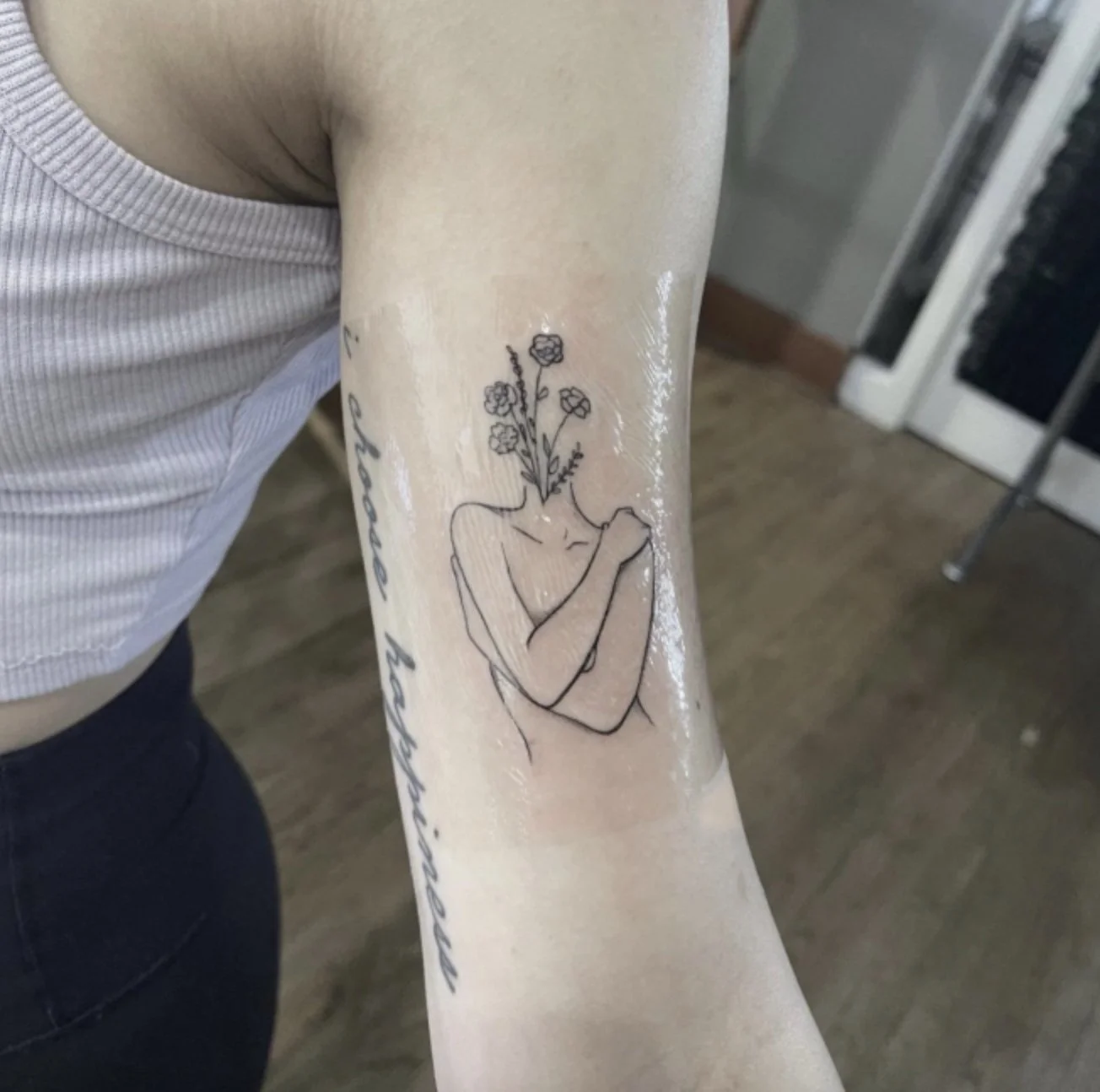
Fine line and delicate detail work often heal a bit softer, which is completely normal for this style. Because these tattoos are created with a lighter hand and very small needles, they are more prone to subtle fading and may benefit from a touch-up within the one-year window to refine or reinforce the design.
This softness is simply part of how fine line tattoos age — not a mistake. Touch-ups help keep them crisp and intentional while still preserving the delicate aesthetic of the style.
-
Touch-ups aren’t mandatory, nor are they an automatic follow-up appointment. They’re assessed case by case, depending on how your skin healed and whether the tattoo would benefit from a little refinement.
Some tattoos heal perfectly with no touch-up needed at all. Others may need a bit of extra love — especially pieces with delicate detail, very fine linework, or placement in areas that move a lot or rub against clothing.
Every tattoo and every body is different, so we simply evaluate the healed result and make the best decision together.